
Roles Before Rights: Why Cooperation Fails When Ownership is Rushed

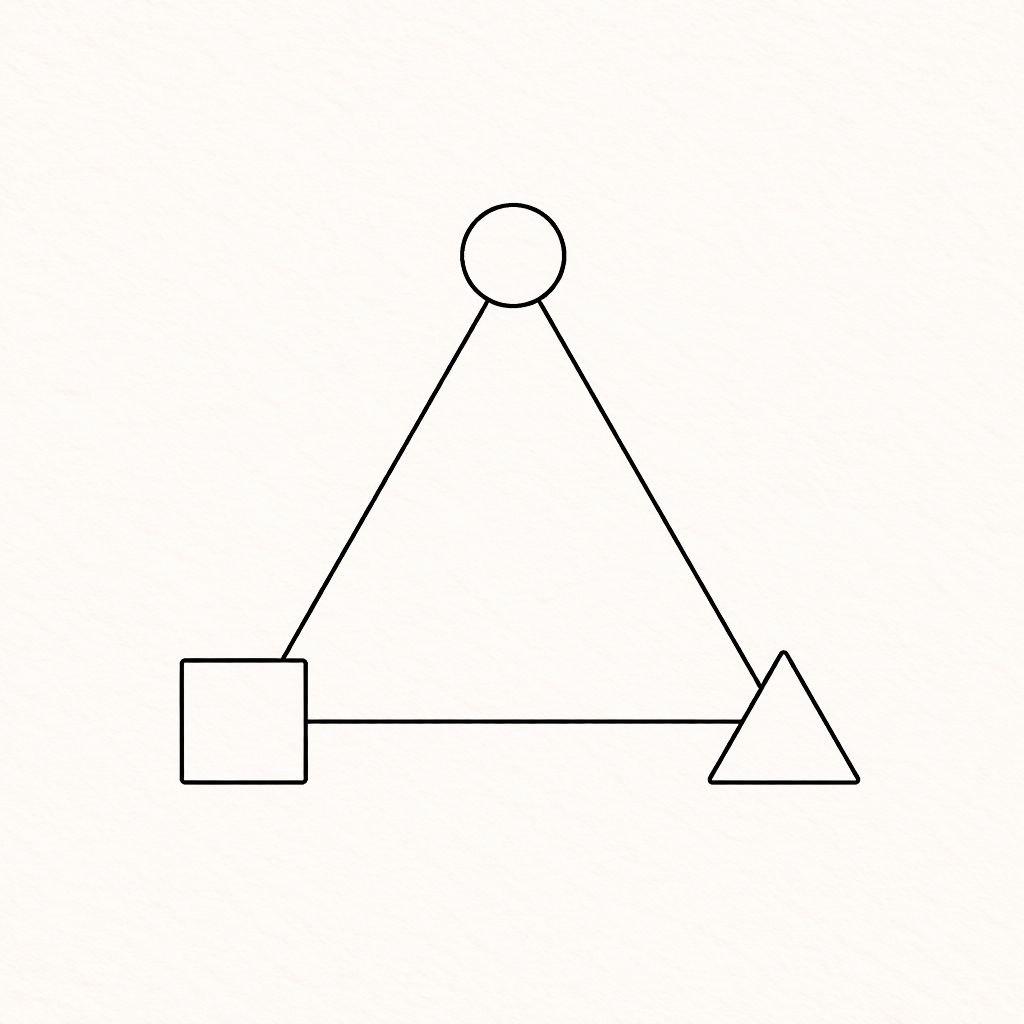
The Fear Is Understandable
Many people worry that talking about “roles” is just hierarchy in disguise.
That fear comes from lived experience under systems where power is hoarded, hidden, and abused.
This section does not dismiss that fear.
It explains why rushing ownership often recreates the very dynamics people want to escape.

Equality Is Not the Same as Sameness
Treating everyone as identical from day one does not create fairness.
It creates confusion.
Different kinds of contribution carry different kinds of responsibility.
Pretending otherwise shifts risk onto people who did not choose it.
Ownership Is Not the First Question
Before asking who owns something, cooperative systems must answer:
What problem are we solving?
What culture are we building?
What responsibilities does this require?
Without clarity on those, shared ownership becomes unstable.

Why Early Democracy Often Breaks Things
When governance is opened before shared understanding exists:
- Decisions are made without context.
- External logics are imported unintentionally.
- Momentum stalls under process.
This is not sabotage.
It is structure moving faster than culture.

A Real Example: When Structure Was Rushed
The political project Your Party launched with joint founders and immediate democratic participation.
Shared values were assumed to be enough.
They weren’t.
What Went Wrong
Without a clearly established organisational identity:
- Leadership roles blurred.
- Authority was contested rather than designed.
- Founders lost formal control early as governance shifted before culture had stabilised.
- Public trust eroded.
- Momentum collapsed.
This was not a failure of democracy.
It was democracy introduced too early.

The Lesson
Democracy works best when people know what they are democratising.
Diagnosis must come before decision-making.
Otherwise votes are cast on symptoms, not causes.
Membership Is a Protective Role
Ownership is not just an inclusion mechanism.
It protects:
- the mission
- existing contributors
- future members
- the wider public
Granting ownership without preparation weakens that protection.
Why Not Everyone Needs Ownership
Some people want to contribute skill, labour, or expertise without governance responsibility.
That is not lesser participation.
It is different participation.
Forcing ownership onto people who do not want it is not empowerment.
It is burden-shifting.
Contributor, Collaborator, Co-operator
Cooperative systems have always relied on multiple roles.
Some contribute work.
Some collaborate over time.
Some co-own and govern.
Confusing these roles harms everyone involved.

This Is Not About Status
Roles are not moral rankings.
They are design responses to:
- risk
- responsibility
- time commitment
- cultural alignment
Rights follow responsibility, not enthusiasm.
Why Time Matters
Trust is not declared.
It is demonstrated.
Healthy systems allow people to:
- contribute first
- understand the culture
- decide what level of responsibility they want
Permanence without trial creates fragility.
Open Membership Still Applies
Voluntary and open membership does not mean instant ownership.
It means:
- access without gatekeeping
- education alongside participation
- pathways into responsibility
Education is not optional.
It is a core cooperative principle.
What This Protects Against
When roles are clarified early, systems avoid:
- Personality-driven power struggles
- Ideological capture
- Premature professionalisation
- Burnout disguised as commitment
Structure reduces the need for personal authority.
Why This Actually Enables Equality
When ownership is earned through contribution and understanding:
- People participate willingly.
- Governance becomes meaningful.
- Equality becomes functional, not symbolic.
This is how cooperation scales without hollowing out.
This Is Design, Not Distrust
Clear roles do not imply suspicion.
They remove ambiguity so trust does not have to carry the entire system.
Structure protects relationships.
The Question to Hold
Not: “Who deserves ownership?”
But: “What does this system need to stay coherent?”
That question changes everything.
How This Sets Up What Comes Next
Once roles and responsibility are clear, cooperation can grow without fear.
The next section looks at time, trust, and permanence as design tools.