
Contracts Over Hierarchy

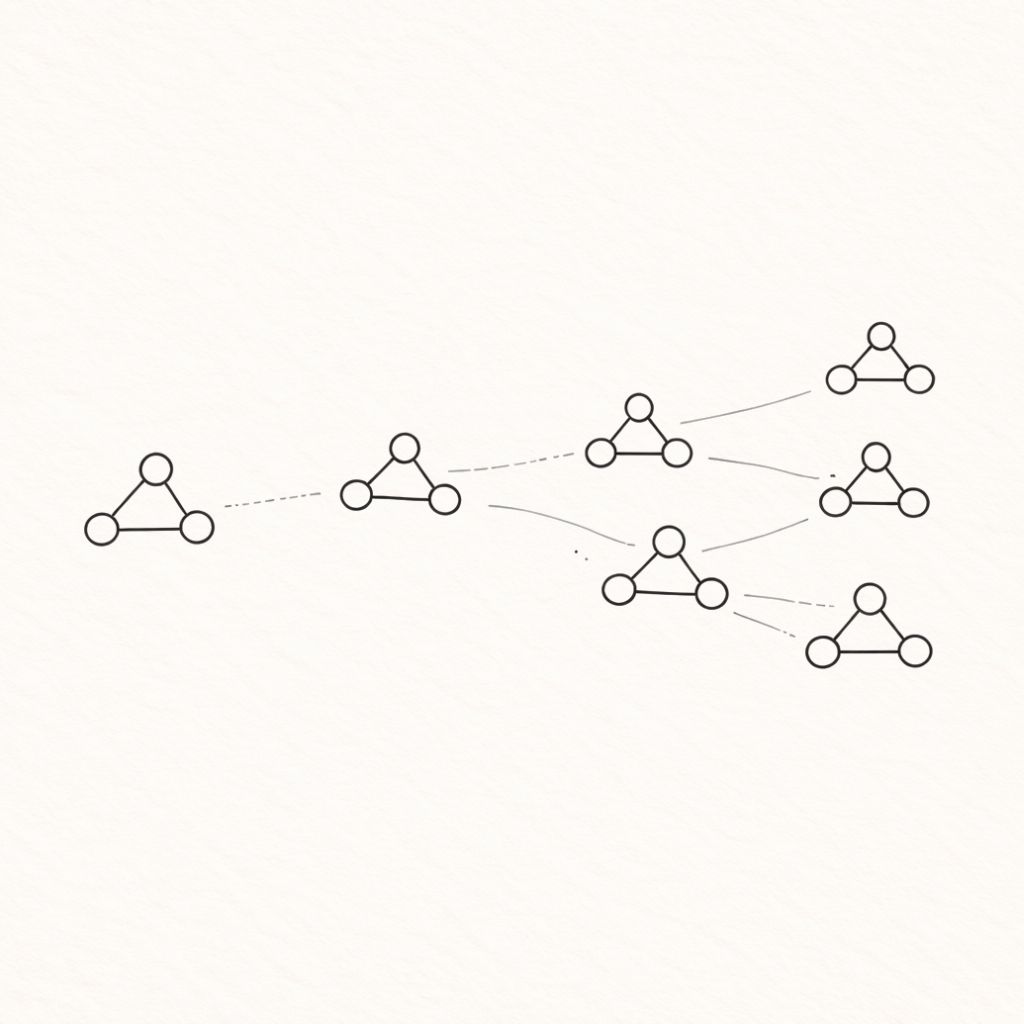
The Usual Growth Move
When organisations grow, they usually expand by:
- adding departments
- internalising functions
- centralising authority
This feels efficient but it is also how power accumulates.
Why Hierarchy Creates Capture
Hierarchy concentrates decision-making.
Those at the top gain:
- informal influence
- structural advantage
- control over others’ labour
Over time, cooperation turns into dependency.

Internal Authority Is Not Neutral
When work is internalised:
- one side controls pay
- one side controls continuation
- one side controls direction
Even in values-led organisations, this creates imbalance.
The Alternative Most People Miss
There is another option.
Instead of hierarchy:
use contracts.
Instead of absorption:
use long-term relationships.

What “Contracts” Mean Here
This is not short-term gig work.
It means:
- clear scope
- defined responsibility
- mutual obligation
- exit without punishment
Contracts define cooperation without ownership transfer.
Why Contracts Can Be More Ethical
Contracts make power visible.
They specify:
- who decides what
- what happens if things change
- how risk is shared
Nothing relies on goodwill alone.
Hierarchy Hides Power
Internal authority often feels relational:
“we’re a team”
“we trust each other”
“we’ll work it out”
But when conflict arises, structure decides.
Contracts Remove Ambiguity
With contracts:
- expectations are explicit
- dependence is limited
- disagreements are containable
This protects both sides.

How Mondragon Used This Logic
Mondragon did not turn functions into departments by default.
Many functions became:
- separate cooperatives
- linked by contract
- bound by shared infrastructure
Coordination without absorption.
Why This Protected Founders
Founders kept:
- autonomy
- governance
- economic agency
They cooperated without surrendering control to a central body.
Why This Protected Workers Too
Workers were not trapped inside opaque hierarchies.
They could:
- exit without collapse
- negotiate collectively
- form new enterprises
Mobility was structural, not personal.

Long-Term Relationships Still Matter
Contracts did not mean isolation.
Relationships were:
- repeatable
- durable
- mutually reinforcing
But never enforced through internal authority.
Why This Scales Better Than Hierarchy
Hierarchy scales by stacking control.
Contracts scale by multiplying relationships.
Only one of these avoids domination.
A Common Misreading
This is not about:
- marketising cooperation
- weakening solidarity
- avoiding commitment
It is about structuring commitment safely.
Commitment Without Capture
Contracts allow people to commit deeply:
- without surrendering voice
- without permanent dependency
- without founder erasure
That is the point.
Why This Matters for Modern Systems
Most cooperative failures happen when:
- everything is internal
- authority is vague
- exit becomes impossible
Contracts prevent this.

What This Establishes
Cooperation does not require hierarchy.
Long-term collaboration does not require absorption.
Power can be coordinated without being centralised.
Preparing for the Next Section
The next question is unavoidable:
If cooperation grows,
how is sweat equity protected?
This is where many systems break.