
Protecting Sweat Equity

Protecting Sweat Equity Is a Structural Question
People resist cooperation for a reason.
They have invested:
- time
- reputation
- labour
- and risk
The question is not moral.
It is whether cooperation protects what has already been built.

Why Founders Fear Being Pushed Out
In many organisations:
- ownership is diluted
- authority shifts suddenly
- early contributors lose influence
- and risk
This creates a rational fear that cooperation means erasure.
Mondragon addressed this structurally.
What Mondragon Did Differently
Mondragon did not protect founders by giving them permanent control.
It protected them by separating security from domination, and continuity from ownership.
This distinction is important.
Indivisible Reserves Explained Clearly
Mondragon enterprises built indivisible reserves.
These reserves:
- could not be sold
- could not be extracted
- could not be captured by individuals
They ensured the enterprise would outlive any one person.
They did not function as personal payout mechanisms.

What Indivisible Reserves Actually Protected
Indivisible reserves protected:
- the organisation
- the workers who followed
- the wider cooperative ecosystem
They preserved continuity.
They did not replace income, wages, or pensions.
So How Were Founders Financially Secure?
Founders were not expected to sacrifice themselves.
Their security came through:
- stable, salaried roles
- long-term employment within their enterprise
- opportunities across the cooperative network
- Accumulated capital accounts built from retained profits, accessed over time (similar to a pension, but structurally tied to participation)
Security was ongoing, not extracted upfront.
Work, Not Ownership, Provided Income
Income was tied to:
- continued contribution
- functional responsibility
- organisational need
Not to shareholding.
Not to founder status.
This reduced pressure to cling to control.

Beyond the Single Enterprise
As the network grew, founders often moved into:
- education roles
- technical support
- governance functions
- advisory positions
Their experience retained value.
Their livelihood did not depend on domination.

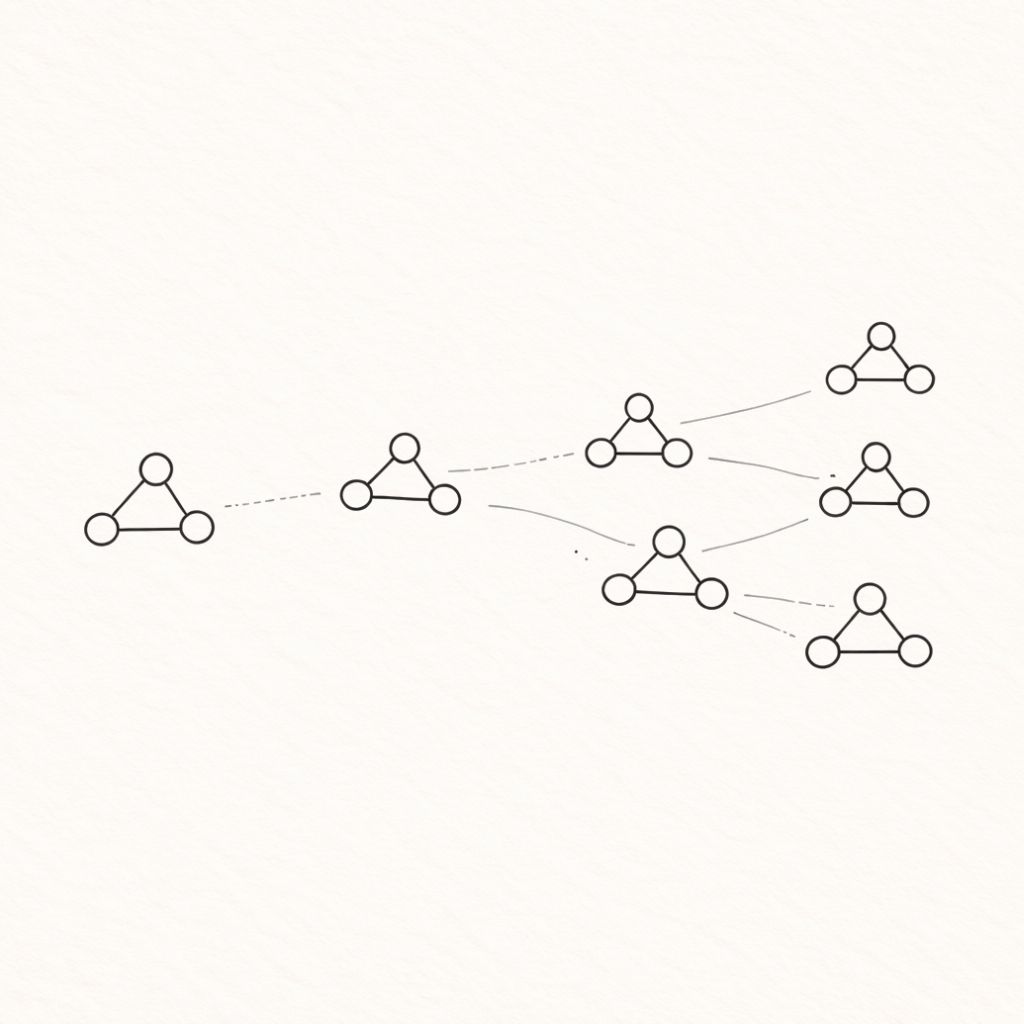
Why Modularity Matters Here
Growth did not happen by absorbing everything into one organisation.
Instead:
- new functions became new cooperatives
- authority stayed local
- founders remained rooted in what they initiated
Expansion happened sideways, not upward.
How This Protects Founders
This structure allows founders to:
- remain central without being absolute
- retain influence without permanent control
- benefit from growth without extraction
Their role evolves instead of being erased.
How This Protects Others
Because no one owns the system:
- later members are not subordinated
- governance cannot be bought
- authority remains accountable
Protection runs in both directions.
What This Does Not Allow
These structures do not justify:
- permanent founder control
- hereditary leadership
- profit extraction based on early entry
Protection is bounded by role, time, and function.

Why This Reduces Conflict
When security is structural:
- there is less fear
- less power-hoarding
- less need to “lock things down”
Trust becomes possible because risk is visible.
Sweat Equity Without Capture
Mondragon showed that it is possible to:
- honour early contribution
- protect long-term builders
- prevent domination
But only when structure does the work.
What This Establishes
Cooperation does not require self-sacrifice.
But it also does not reward early entry with permanent power.
Protection must be designed, or it will be fought over.
Preparing for the Next Section
The next question follows directly:
Do cooperative systems create dependence, or do they create new founders?
This distinction changes everything.