
Mondragón Logic

What This Pathway Is About
This pathway explores how cooperative ecosystems grow without absorbing people, projects, or power into a single organisation.
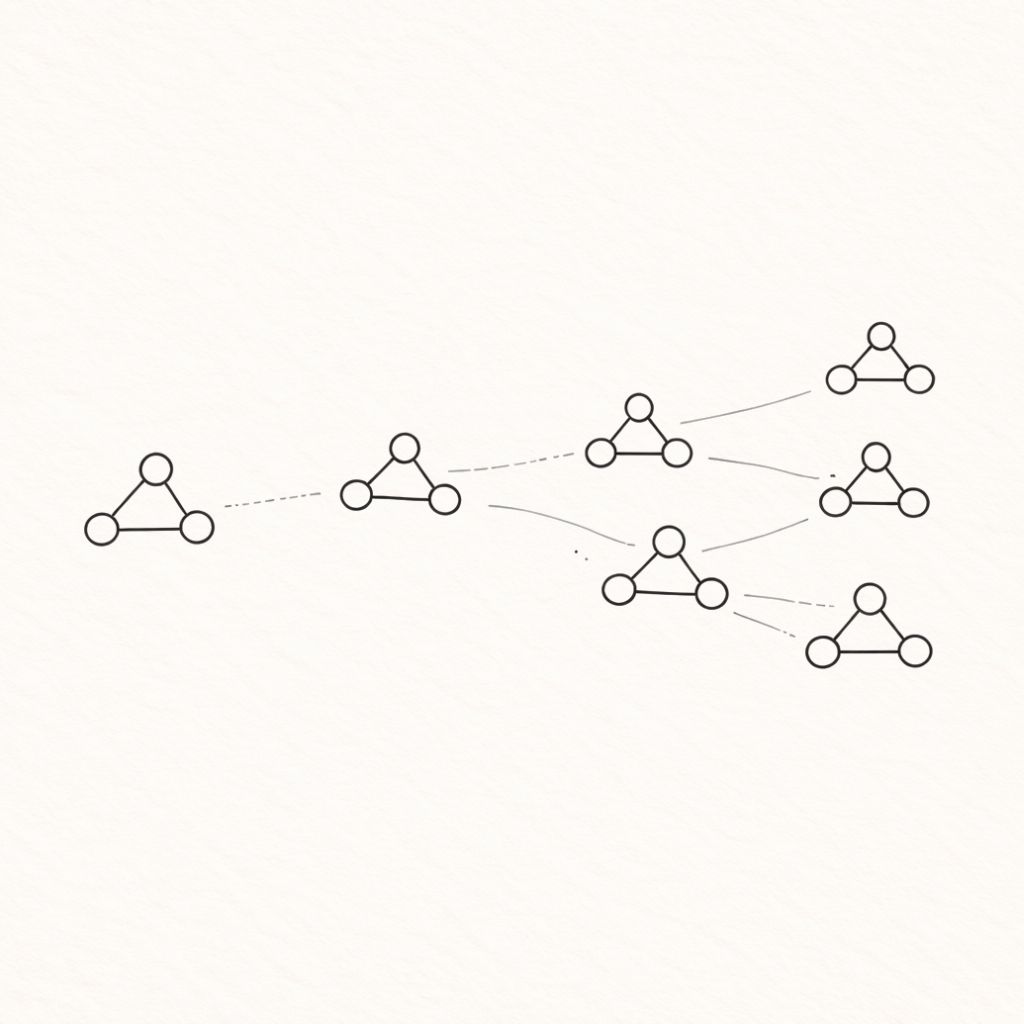
It examines how Mondragon developed a logic of growth based on multiplication, not accumulation.
The Problem This Pathway Addresses
Many cooperative projects struggle with growth.
As they expand, they often face a false choice:
centralise and dilute values, or stay small and stall.
This pathway explores a third option.
Why Departments Become a Dead End
In conventional organisations, growth usually means adding departments.
Over time, this concentrates authority, creates dependency, and weakens initiative.
Mondragon took a different approach.
Growth Through Enterprises, Not Teams
Instead of expanding internally, Mondragon helped functions become independent enterprises.
Each new activity became its own organisation, not a subordinate unit.
Growth happened sideways, not upward.
Mondragon as Logic, Not Blueprint
This pathway does not present Mondragon as a model to copy.
It examines the underlying logic that allowed Mondragon to:
- protect autonomy
- regenerate entrepreneurs
- scale without absorption
What This Pathway Focuses On
This pathway looks at how ecosystems grow by design, including:
- when a function should become its own co-op
- why contracts can be more ethical than hierarchy
- how sweat equity is protected
- how surplus supports future founders
Beyond Coordination Alone
Earlier pathways explored coordination, federation, and confederation.
This pathway goes further.
It asks how cooperative systems create new enterprises and leaders over time.
Why Founders Resist Cooperation
Many founders hesitate to cooperate more deeply.
Not out of ego, but out of risk:
- loss of control
- loss of livelihood
- loss of what they built
Mondragon addressed this structurally.
Protection Through Design, Not Trust
Mondragon did not rely on goodwill alone.
It used structures such as:
- contracts instead of hierarchy
- indivisible reserves
- patient capital
- clear boundaries of authority
These reduced personal risk.
Creating Entrepreneurs, Not Dependants
Mondragon’s goal was not to grow one organisation.
It was to produce capable founders at scale.
Education, support, and finance were used to enable independence, not dependency.
Why Time Matters
Growth in cooperative systems is slow by design.
Patient capital and long horizons allowed:
- skills to mature
- trust to develop
- enterprises to stabilise
Time was treated as an input, not a cost.
Who This Pathway Is For
This pathway is useful for people who are:
- building organisations
- founding cooperative projects
- designing long-term ecosystems
- thinking about growth beyond a single entity
Begin the Pathway Now
After this introduction, the pathway begins with the shift from teams to enterprises, and why this protects both founders and the wider ecosystem.
Follow This Pathway by Email
You can subscribe to receive each carousel as a daily email.
The series ends automatically once the pathway is complete and provides a simple way to return to the material without losing your place.
You’ll also receive occasional emails from Co-op Evolution.
Unsubscribe anytime.