
Creating Entrepreneurs, Not Dependants

Why This Section Matters
How systems grow matters as much as how they are governed.
Some systems produce:
- initiative
- capability
- new founders
Others quietly produce dependence.
Mondragon was deliberate about this.
The Risk of Centralised Support
When support is centralised without boundaries:
- initiative concentrates
- decision-making bottlenecks form
- dependency increasesation without commitment
Growth slows, even as organisations get bigger.
Support Can Create Dependence
Well-intended systems often fail by:
- providing resources without autonomy
- absorbing functions instead of spawning them
- rewarding compliance over initiative
This weakens both individuals and institutions.

Mondragon’s Alternative
Mondragon did not design its system to “look after” people.
It designed it to:
- create capable founders
- support independent enterprise
- multiply responsibility
Support existed to enable autonomy, not replace it.
Education as Infrastructure
Education was not peripheral.
It was foundational.
Mondragon invested heavily in:
- technical training
- management education
- cooperative governance
- financial literacy
Capability preceded ownership.
Why This Produced Entrepreneurs
People were not treated as labour to be managed.
They were treated as:
- future organisers
- future founders
- future stewards
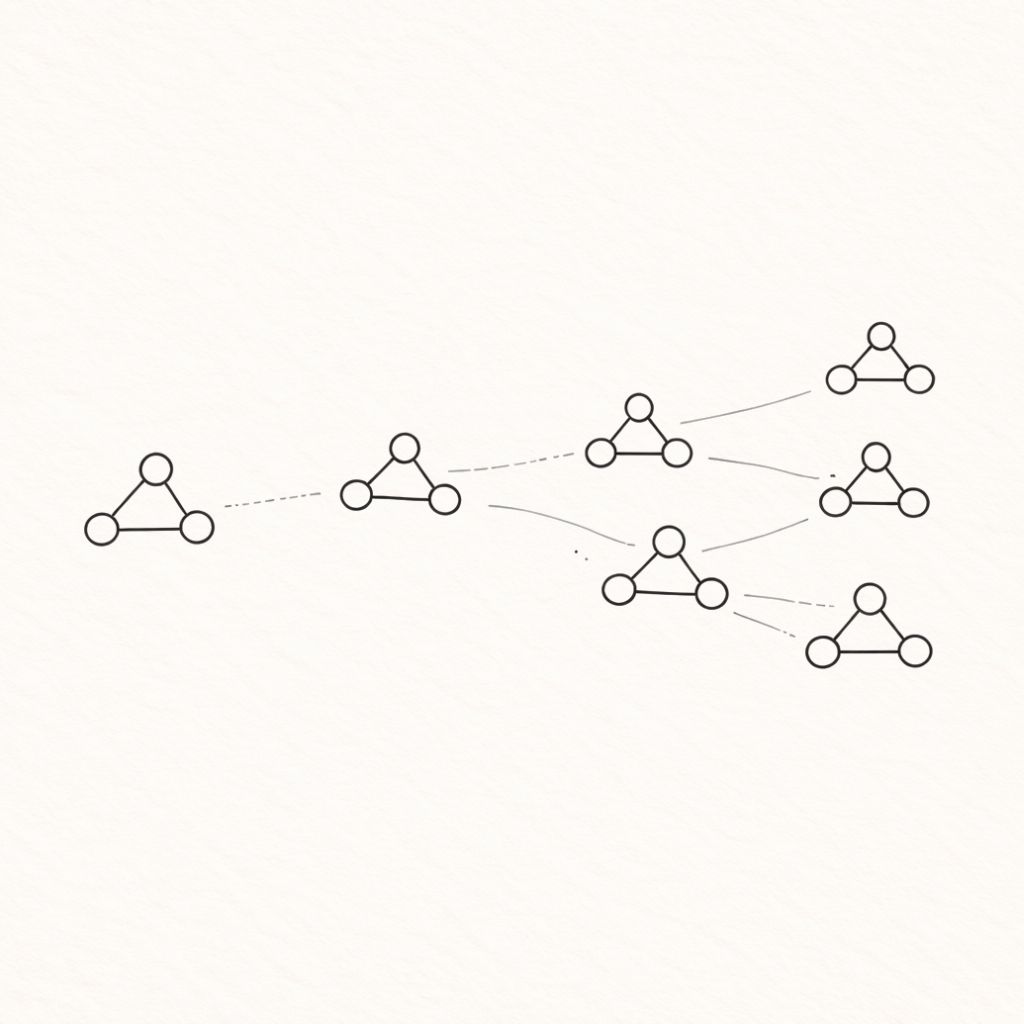
The system assumed growth would come from within.

Enterprise Creation Was Intentional
New cooperatives were created to:
- fill real economic gaps
- meet identified needs
- strengthen the ecosystem
Not because individuals “had ideas,” but because the system required new capacity.
From Worker to Founder
Mondragon repeatedly enabled people to:
move from contributor
to organiser
to founder
This was not symbolic. It was structural.
Autonomy Was the Reward
The primary reward was not extraction.
It was autonomy.
People gained:
- control over their domain
- responsibility for outcomes
- dignity through authorship
This changed the culture of work itself.
Support Without Absorption
Within its regional ecosystem, Mondragon support bodies:
- did not absorb enterprises
- did not take over decision-making
- did not centralise strategy
They enabled and stepped back.

Support Strengthens the System
When new enterprises were formed:
- they became part of the wider network
- they contributed to shared infrastructure
- they increased the system’s overall capacity
This meant support worked in two directions.
New cooperatives gained independence.
Existing cooperatives strengthened the system they depended on.
Why This Scales Better Than Management
Management scales linearly.
Entrepreneurship scales multiplicatively.
Mondragon chose the second.
This is why it grew horizontally rather than hierarchically.
The Role of Patient Capital
Growth was paced.
Capital was patient.
Enterprises were allowed time to:
- learn
- stabilise
- mature
Speed was not mistaken for success.
What Modern Systems Often Miss
Many modern cooperative efforts focus on:
- inclusion without preparation
- participation without capability
- democracy without structure
This creates fragility, not empowerment.

Creating Capacity Is a Design Choice
Entrepreneurial capacity does not appear automatically.
It must be:
- trained
- supported
- structurally encouraged
Otherwise, systems revert to dependency by default.
Why This Matters for Confederation
Confederated systems only work when:
- units are capable
- leaders can emerge locally
- failure does not collapse the whole
Entrepreneurial ecosystems are more resilient.
What This Section Establishes
Growth is healthiest when it:
- creates new centres of initiative
- distributes responsibility
- multiplies authorship
This is how systems renew themselves.

How This Connects to Previous Sections
Earlier sections addressed:
- protection of sweat equity
- modularity over absorption
- contracts over hierarchy
This section explains how growth continues without dependence.
Preparing for the Next Section
The next section looks at regeneration.
Specifically:
- how surplus circulates
- how time reshapes outcomes
- and why patience is a structural asset
Growth is not just expansion.